
The Netherlands Gambling Authority (Kansspelautoriteit, Ksa) has fined EOD Code SRL €37.25 million for offering online gambling to Dutch players without a licence. The Ksa announced the fine on 22 October 2026 and calls it the highest it has imposed for illegal gambling so far. EOD Code runs Instantcasino, Skyhills and ten other sites. One of the reasons the fine went up: players could deposit in cryptocurrency.
What the Ksa found
According to the fine decision dated 6 October 2026, Ksa inspectors could open accounts with Dutch details, deposit and play on instantcasino.com on several checks between November 2024 and July 2025, and again in July 2026 through the mirror instantcasino17.com. No technical measures blocked Dutch players. One test deposit of €20 was made in Bitcoin, and balances paid in through crypto were shown in euros. The registration form offered “The Netherlands” and the +31 dialling code, and age was not visibly verified before sign-up was completed. The site said EOD Code was registered and regulated in Costa Rica.
Further checks in 2025 and 2026 tied eleven more sites to the company: skyhills.com, slotmonster.com, betiro.com, betblast.com, fastslots.com, goldenpanda.com, sambaslots.com, winningz.com, incognitocasino.com, foxygold.com and luckypays.io. Several took Dutch bank payments, including iDEAL, and Dutch influencers promoted Skyhills on Instagram, YouTube and Discord. EOD Code did not respond to the Ksa’s request for its views or to a request for turnover data.
How the fine was calculated
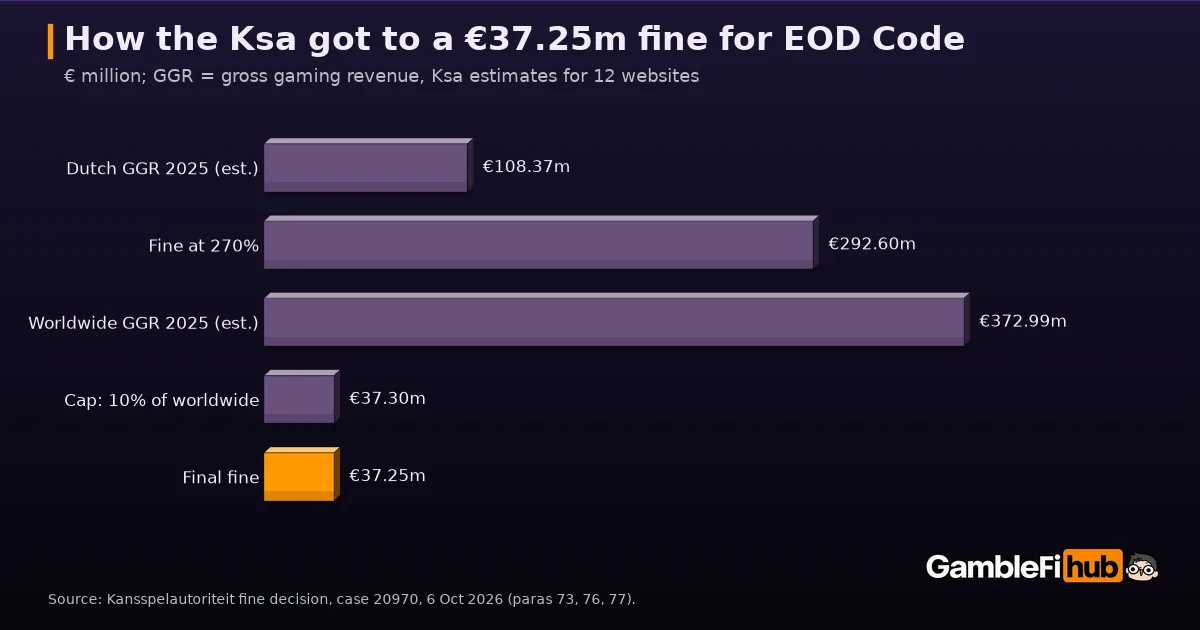
Because EOD Code supplied no figures, the Ksa estimated its revenue with its published search-volume method. It puts EOD Code’s 2025 gross gaming revenue from Dutch players across the twelve sites at €108.374 million. The base fine was 100% of that, raised by 170 percentage points for aggravating factors: missing age verification (50), unfair terms (50), prohibited bets (20) and 10 points each for inactivity fees, autoplay or turbo play, missing deposit limits, minimum deposit amounts and the way deposits were made. On that last point the decision says crypto payments are not permitted payment methods because they can help tax evasion or money laundering.
The result, 270% of Dutch revenue, was €292.6 million. Dutch law caps such a fine at 10% of worldwide turnover in the previous year. The Ksa estimated worldwide gross gaming revenue at €372.989 million, so the cap was €37.2989 million and the fine was cut to €37.25 million. The unfair terms it listed include a €5 monthly inactivity fee from the thirteenth month, withdrawal caps of €4,000 a day, €10,000 a week and €20,000 a month, and a clause letting the operator keep the balance of a player who asks for permanent self-exclusion.
Key facts
Regulator: Kansspelautoriteit (Netherlands), case 20970.
Company: EOD Code SRL (Instantcasino, Skyhills and ten other sites).
Fine: €37,250,000, decision of 6 October 2026, sent 7 October, published 22 October.
Earlier action: order subject to penalty in July 2025; the Ksa moved in December 2025 to collect €840,000 in forfeited penalties.
Status: EOD Code can object within six weeks; an objection does not suspend the decision.
Why it matters for GambleFi
Dutch regulators do not treat crypto as a neutral payment rail. In their fine policy, accepting crypto deposits makes an unlicensed offer more expensive, and here it added 10 percentage points to the calculation. The case also shows how offshore operators that point to a Costa Rica registration or a Caribbean licence fare in a regulated market; our reports on Comoros declaring Anjouan licences illegal and the Curaçao portal breach cover that side. For a recent UK case about payments, see the UKGC’s £900,000 settlement over withdrawal delays. The GambleFi FAQ explains the basics. This is a news report, not legal or gambling advice.