
On 4 November 2026 Attorney General Tim Griffin sued VGW, the operator behind Chumba Casino, LuckyLand Casino, LuckyLand Slots and Global Poker. The AG’s release says the company tells Arkansans it is not running a gambling business, and that this claim is false. The civil case is brought under the Arkansas Deceptive Trade Practices Act. It is a separate filing from Griffin’s same-day suit against Kalshi.
Gold Coins in, Sweeps Coins out
Griffin’s theory turns on the dual-currency model. Consumers buy “Gold Coins,” which he calls “effectively worthless,” and receive “Sweeps Coins” as a bonus. Sweeps Coins can be played on casino-style games and redeemed for cash. “Any reasonable person would call that gambling,” he said. The complaint (White County Circuit Court No. 73CV-26-1743) walks through the same distinction: Gold Coins cannot be cashed out; Sweeps Coins can, at one U.S. dollar each on the platforms’ terms as the state describes them. An illustrative purchase in the filing has a consumer paying $20 and receiving 20.50 Sweeps Coins.
Sweepstakes cafes, now online
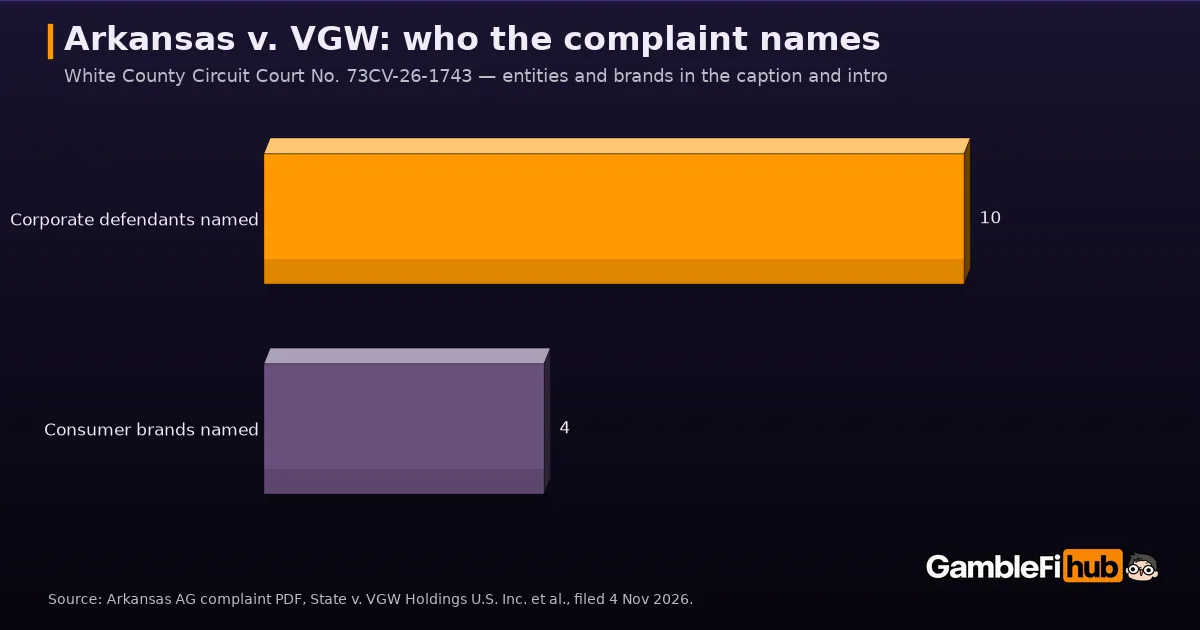
The AG compares the structure to internet sweepstakes cafes that sold “internet time” with free game credits redeemable for cash. Courts, he says, rejected that framing, and he calls VGW’s version “too-cute-by-half logic.” The complaint names ten corporate defendants across the VGW group (see chart) and notes that LuckyLand Slots stopped operating in the United States in September 2026, after previously doing business in Arkansas as alleged. The platforms, the state says, are reachable by anyone with an internet connection, including users aged 18 to 21, outside Arkansas’s Amendment 100 casino framework.
What the state wants
This is a filed complaint, not a ruling. The release says the lawsuit seeks restitution, penalties, taxes and injunctive relief. An injunction is the piece that could later restrict Arkansas access; nothing in the filing alone changes what players can do today. VGW has not yet answered in the materials we reviewed. State consumer suits against online gambling and prediction-market products are stacking up alongside criminal tracks in other states, and Arkansas is now pressing both a prediction-market case and a sweepstakes-casino case on the same day.
Key facts
Case: State of Arkansas ex rel. Tim Griffin v. VGW Holdings U.S. Inc. et al., No. 73CV-26-1743, White County Circuit Court, filed 4 November 2026.
Legal basis: Arkansas Deceptive Trade Practices Act (civil).
Brands named: Chumba Casino, LuckyLand Casino, LuckyLand Slots, Global Poker.
Relief sought (per AG release): restitution, penalties, taxes, injunctive relief.
Related same-day suit: Arkansas v. Kalshi, Independence County (consumer prediction-market case).
Sources: Arkansas Attorney General news release and complaint PDF, 4 November 2026.
Why it matters for GambleFi
Sweepstakes dual-currency casinos sit next to onchain iGaming token (GambleFi) venues in the same enforcement crosshairs: state gambling law applied to products that market themselves as something else. A DTPA suit does not need to wait for a federal pre-emption ruling, which is why consumer-protection filings keep arriving beside CFTC and criminal tracks. For how crypto casino tokens and regulation differ from prediction markets, see the GambleFi FAQ or our Shuffle and SX Bet project pages. This is a report on a lawsuit, not legal or gambling advice.