
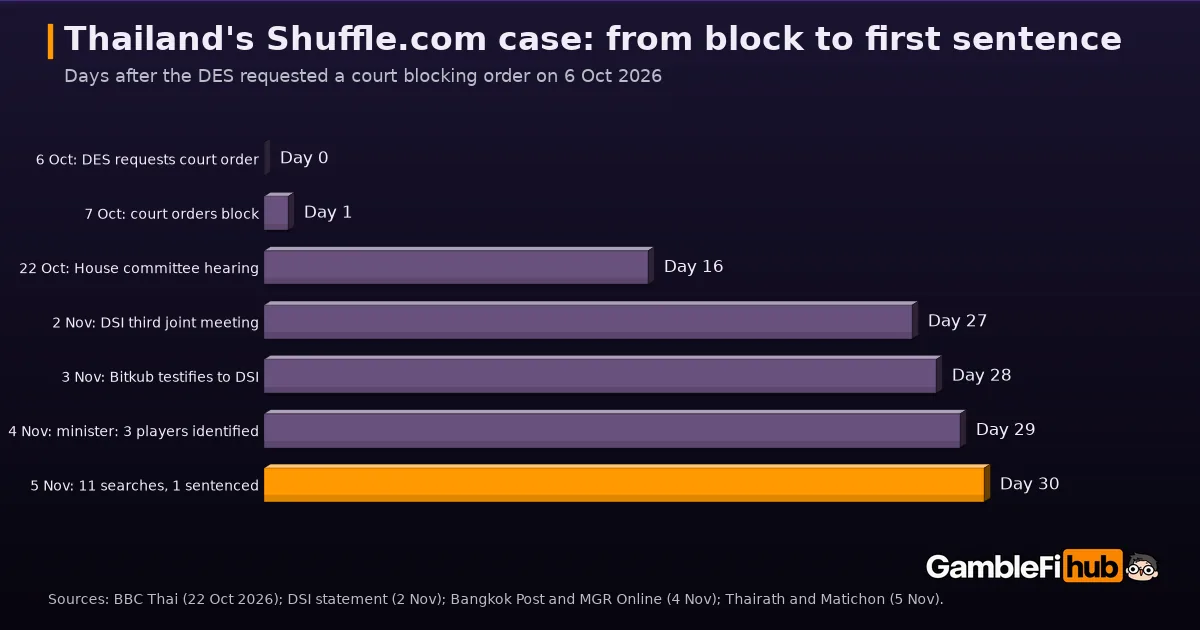
BANGKOK — The Shuffle.com case in Thailand has produced its first court ruling. On 5 November the Technology Crime Suppression police said officers had searched 11 locations in Bangkok and other provinces, identified 11 suspects and seized phones and computers from their homes, Thairath and Matichon reported. One suspect who confessed was charged the same day and sent to a district court, which sentenced that person to prison. The length of the sentence was not reported. This follows our reports on the block and first inquiries, the DSI inquiry and the House hearing. We found no public statement from Shuffle on the Thai case.
What the police did
Pol Maj Gen Arut Saengchan, a deputy commander of the bureau, said some suspects confessed and others denied the allegations. The seized devices are being examined forensically for evidence, and those who deny gambling on the site can still be prosecuted if that evidence shows they played from Thailand. The bureau said it has formed 80 operational teams after receiving data from three digital-asset exchanges. Earlier, on 4 November, Justice Minister Rutthapon Naowarat had said cyber police had identified three Thai players with transfers to the site and were preparing cases under the Gambling Act of 1935, with more summonses expected (Bangkok Post, MGR Online).
Why the players come first
Police said on 2 November that because Shuffle.com is registered in Curaçao and run from abroad, they must first build cases against players in Thailand under Section 5 of the Criminal Code, which covers offences committed abroad with effects in the kingdom, before moving on to the operators, Thai PBS reported. The same day, a DSI statement on its third joint meeting in inquiry 148/2569 said the tech-crime police now lead the fact-finding, the Anti-Money Laundering Office (AMLO) is analysing the money flows, every SEC-licensed digital-asset firm is invited to give information, and the DSI is asking foreign authorities for the directors, shareholders and domain registrant behind the site.
The inquiry and the block
On 3 November Bitkub’s legal team told DSI investigators about 49 customers who sent more than 100 million baht in crypto to Shuffle.com, the minister said. Zhang Taiyang, husband of Bhumjaithai MP Suchada Zhang Thaensap, has been questioned; the MP has not. The minister said assets could be frozen only if the evidence supports it, and that it is for the DSI to say whether the matter becomes a special case. Neither person has been charged. We found no report that the court-ordered block on shuffle.com, shuffle.net and shuffle.online, issued on 7 October according to the DES (BBC Thai), has been lifted or widened.
Key facts
Police action: 11 locations searched, 11 suspects identified, phones and computers seized (5 Nov 2026).
First ruling: one suspect who confessed sentenced to prison by a district court on 5 Nov; term not reported.
Legal basis: Gambling Act 1935; Criminal Code Section 5 for an offshore site.
Exchange data: three exchanges have shared data; Bitkub reported 49 customers and over 100m baht.
Status: DSI inquiry 148/2569, not yet a special case; block on three domains still in place as last reported.
Sources: Thairath; Matichon; Bangkok Post; DSI; Thai PBS.
Why it matters for GambleFi
Thailand is going after the people who played rather than waiting for an offshore operator to answer, and it is finding them through records from regulated local exchanges. For anyone using crypto casinos or iGaming token (GambleFi) platforms from a country where online gambling is illegal, that makes on-chain deposits a paper trail. It also puts pressure on Thai exchanges to screen transfers, a theme in our report on the Thai SEC and AMLO review. For background on the brand, see our Shuffle project page. This is a report on an ongoing case, not legal advice.