
A new Texas prediction-market bill for the 2027 session does not try to ban sports contracts. House Bill 598, filed by state Representative Salman Bhojani on 9 November 2026, would add a new Chapter 623 to the Business & Commerce Code. It targets topics, age and advertising instead of the product itself. The bill is only filed so far: the 90th Legislature opens in January, and the text says the law would take effect on 1 September 2027.
Twelve banned topics
Section 623.051 of the bill text lists twelve kinds of event contracts an operator could not offer to anyone physically in Texas. They cover criminal investigations, arrests and trials; death sentences and clemency; pending civil lawsuits; a person’s death, illness or health; suicide, self-harm and overdoses; assassinations and kidnappings; terrorism and mass shootings; homicides and other violent crimes; wars and military strikes; casualties and damage from disasters; epidemics; and immigration arrests and deportations. The first item covers the kind of market Polymarket pulled after a backlash, on whether men accused in the Cornell case would be charged, and war markets are already under scrutiny since the Pentagon barred defence staff from trading on nonpublic information.
What is missing matters as much. Sports, elections, culture and economic data are not on the list, and the bill states that it does not legalise gambling or sports betting under the Texas Penal Code. Individual traders are not liable for trading on their own account.
21+ checks, geolocation and ads
Operators would have to locate users before every trade and may not help anyone get around that with a VPN or proxy. Nobody under 21 could trade, and age must be verified with government ID or a commercial data check, not a self-declared birth date. That is stricter than Kalshi’s own deposit limit for 18 to 20-year-olds. Ads could not target minors, run in schools or use under-21 endorsers, and every ad would need a clear 21+ notice. One drafting gap stands out: the line on ads aimed at minors reads “younger than years of age”, with the number missing.
Key facts
Bill: Texas H.B. No. 598, 90th Legislature (Regular Session), introduced version.
Author: Rep. Salman Bhojani; filed 9 November 2026.
Scope: any operator serving people physically in Texas, wherever it is based.
Enforcement: Texas attorney general; injunctions plus civil penalties.
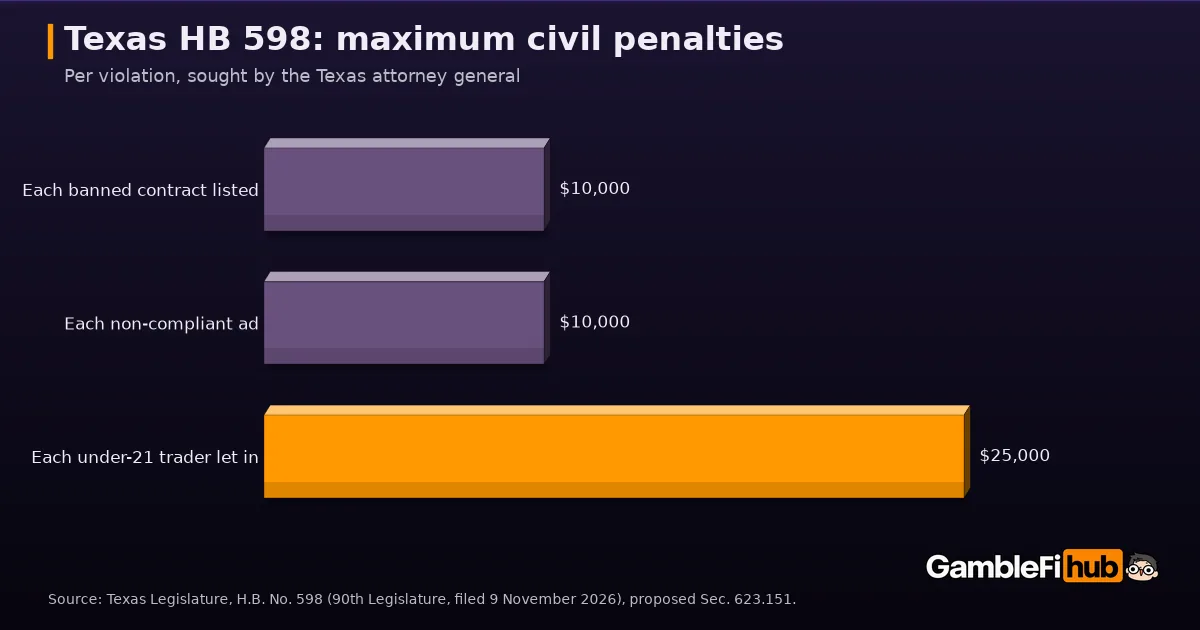
Penalties: up to $10,000 per banned contract or advertisement; up to $25,000 per under-21 trader.
Effective date: 1 September 2027, if passed.
Why it matters for GambleFi
Most states are fighting exchanges in court, as in Missouri, Utah and New York, where a judge has just ruled sports contracts are not swaps. HB 598 takes a different path: it accepts that federal exchanges operate and regulates how. The bill says it applies only as far as federal law allows, which keeps the preemption fight in the background. Its reach “regardless of the location of the operator” would also cover offshore and onchain venues that serve Texans, and those rarely check age or location the way the bill demands. Casino-style contracts are already outside the CFTC’s reach. NEXTPredict first reported the filing. This is a news summary, not legal advice; the GambleFi FAQ explains how prediction markets differ from crypto casinos.